
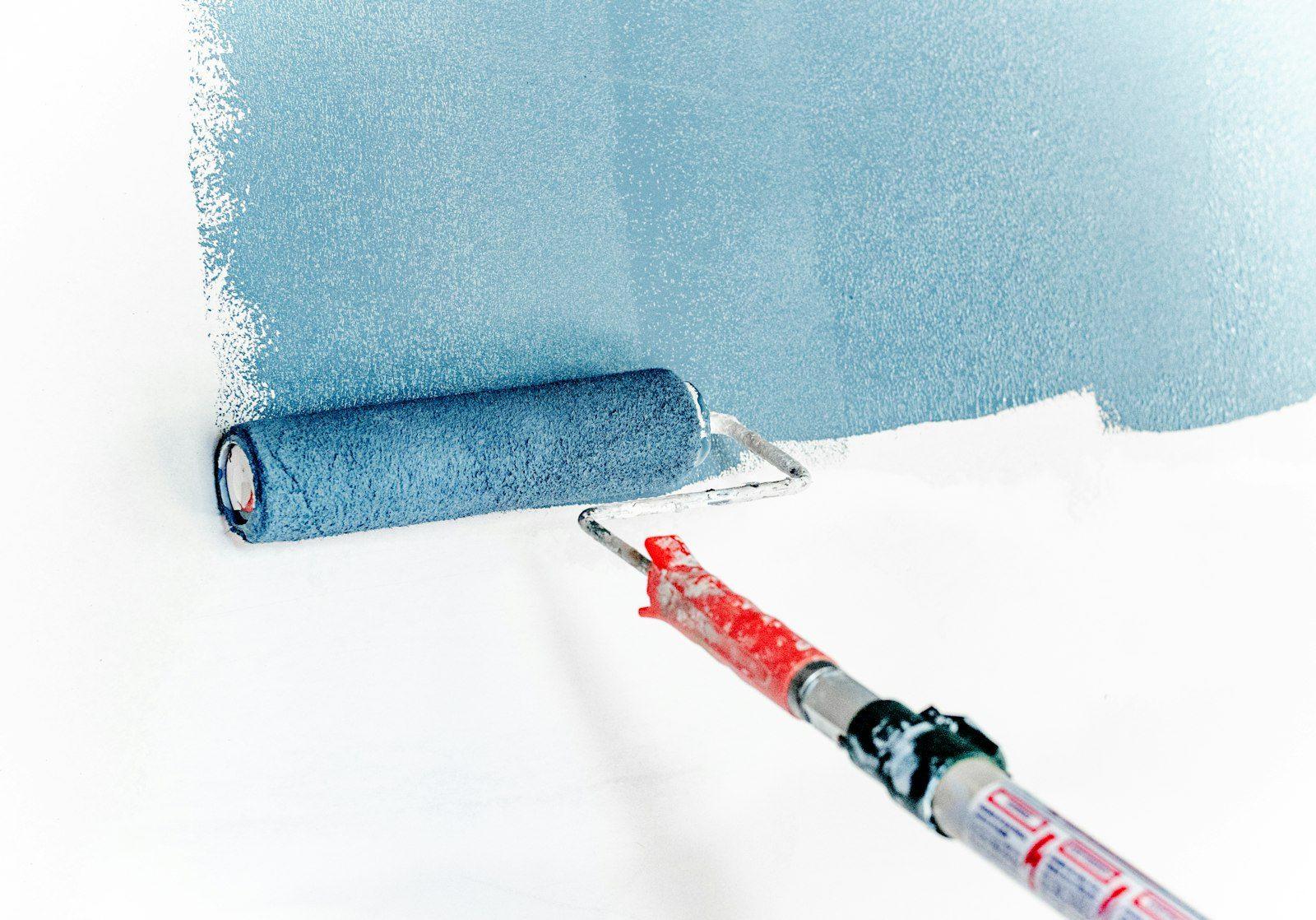
Industrial & Machinery Paints: The Real Cost of Repainting
Ask a plant manager what a repaint costs and they will quote the invoice. Then add the real number: the production line that stood still while the booth dried. For machinery, structural steel and equipment, paint failure is downtime in disguise.
Organic greens chalk and fade on equipment exposed to cutting fluids, washdown and UV from windows and yards. Year three repaints become year-one repaints — and every cycle costs a shutdown.
Chrome oxide green is the anti-repaint pigment
Lightfastness 8/8 and weatherfastness 5/5 mean the colour does not fade in the service life of the machine. Chemical inertness handles cutting emulsions, hydraulic oil splashes and alkaline washdowns that strip organic pigments. The paint film fails from mechanical wear first — not from the pigment.
Formulation is already solved
Full-shade evaluation in 1:1 alkyd/melamine and tint at 1:10 TiO₂ maps directly onto industrial enamel systems. Micronized grades disperse in minutes on standard high-speed dispersers — no bead milling, no colour strength surprises.
One coat system, decade-long colour, zero pigment-driven repaints. Specify GREEN 1000 for vivid emerald equipment lines or GREEN 1002 for deep blue-shade machinery greens.
CONTINUE READING
Failure costs that pigments prevent
| Failure | Cause | Cost to asset owner | Pigment-level prevention |
|---|---|---|---|
| Chalking within 3 years | UV-degradable organic pigment | Repaint of full structure | PG17, lightfastness 8 |
| Fading under heat | Pigment decomposition at bake | Colour mismatch, rework | PG17 stable to 1000 °C |
| Blistering in alkaline substrate | Pigment-alkali reaction | Coating failure, corrosion | PG17 amphoteric-inert |
| Batch colour drift | Uncontrolled pigment lots | Line stoppage | ΔE ≤ 1.0 per DELIKECOLORS spec |
Machinery paints: the repaint bill is the specification
Industrial paint buyers do not buy paint; they buy the interval between repaints. A machine tool, a press, an agricultural harvester or a generator enclosure gets painted once at the factory, and every repaint after that is a production event: the machine is stopped, masked, stripped or keyed, sprayed, and cured — two to four days of lost output in a plant where an idle line costs hundreds of euros an hour. The pigment inside that first paint job is 3–6 % of the wet paint's formulation cost, well under €0.50 per kilogram of finished enamel. The repaint it prevents costs orders of magnitude more than that, and the calculation does not even include the scaffolding, the overtime, the rejected first attempt, or the fact that a repainted machine never quite matches its siblings. That is the arithmetic behind every serious OEM spec for machinery green: the cost of the paint is noise; the cost of the repaint is the signal, and the pigment is the component that decides when the signal fires.
Machinery livery is a brand asset before it is a coating. Agricultural and machine-tool manufacturers paint green because the colour is the company's signature on the product — a faded harvester in a dealer's yard is a used advertisement running against the brand, and a mismatched touch-up panel on a five-year-old machine is visible proof that the paint failed. Chromium oxide green is built for the working environment that machinery actually inhabits: mineral oils, cutting fluids, coolants and cleaning solvents that eat organic pigment chemistry through swelling and extraction. Cr₂O₃ is insoluble in all of them, so the colour under the drip tray looks like the colour on the bonnet. Add lightfastness 8/8 for machines that live near open doors, and the practical conclusion writes itself: on a product whose paint has to survive chemicals, sunlight and a decade of hard use, the only green that makes sense is the one that cannot dissolve, cannot fade and cannot be extracted by anything the machine itself leaks. OEM paint managers who move their green livery to PG17 do it once and stop revisiting the decision.
Coil coating at 240–280 °C: the PMT window
Coil coating is the fastest thermal test in the paint industry, and it is the one that sorts pigments permanently. A coil line runs steel strip at 100–200 metres per minute; the paint is applied, and the strip passes through an oven where the peak metal temperature — the PMT — reaches 240–280 °C for between 20 and 60 seconds before quenching. The pigment has seconds, not minutes, to prove its heat stability, and the criterion is brutal: the colour after the oven must be indistinguishable from the colour that went in, measured in ΔE of 0.5 or less. Organic greens fail this window in exactly the way a coil buyer cannot absorb — the chromophore degrades on the line, the green shifts yellow or brown inside thirty seconds, and because a coil run is kilometres long, the discovery arrives after thousands of metres are already painted. A coil rejected for colour is a full coil of secondary stock, reworked or scrapped at commodity prices. The pigment that shifts in the oven converts a running line into a write-off.
Chromium oxide green treats 280 °C as a cold day. The crystal lattice is stable to 982 °C, so the entire PMT window — including the overshoot excursions that happen when a line slows or a burner hunts — passes with no measurable colour movement. That stability is what lets coil coaters run green as a standard colour instead of a premium headache. The second coil requirement is film thinness: coil topcoats go on at 15–25 μm dry film, a third of what a machinery enamel carries, which means the pigment must deliver full hiding at very low film weight. Micronized grades at D50 ≤0.5 μm are the tool here — finer particles, more tinting strength per kilogram, full coverage in a thin film without pushing pigment volume concentration to the point where the film loses integrity. Silicone-modified polyester systems for 25-year exterior building products add the last requirement, weatherfastness 5/5, and the answer is the same mineral. One pigment covers the entire coil specification: seconds-scale heat stability, thin-film hiding, and a quarter century outdoors.
Formulating green enamels: pigment volume, gloss and grind
Chromium oxide green is an honest pigment in the lab: dense, neutral and predictable, which is why formulators who respect its three quirks never fight it. First, density. At 5.21 g/cm³, chromium oxide is more than twice the weight of organic pigments, so a kilogram occupies a small can volume and a small share of pigment volume concentration — the formulator gets strong colour at moderate PVC, which is exactly where gloss and film integrity want to live. The same density causes settling in storage; the fix is standard anti-settling rheology in the paint, and it is a small price for a pigment that never bleeds, never blooms and never hydrolyses. Second, oil absorption of 20–25 g/100 g puts the pigment's binder demand in the same neighbourhood as conventional iron oxides, so CPVC calculations behave: the film stays cohesive at full colour depth instead of going brittle the way overloaded organic formulations do. Third, grind. A standard grade at D50 1–2 μm disperses to Hegman 6–7 in a normal high-speed disperser pass; micronized grades reach full development in shorter passes, which matters on modern lines where dispersion time is the bottleneck.
Two application questions close the formulation story. Waterborne systems are the first: Cr₂O₃ carries a neutral pH of 6–8 in water extract, releases no ions into the aqueous phase, and therefore behaves in waterborne alkyd and acrylic enamels exactly as it does in solvent systems — no pH drift, no flash-rust contribution, no stabilizer fights. The second is gloss: chromium oxide delivers a slightly lower gloss ceiling than phthalocyanine green at equal PVC, because its particles scatter a little light. The honest response is that most industrial green finishes are satin or matte precisely because they are built for machinery that gets dirty, and a formulator who needs gloss adjusts resin and matting balance — not pigment chemistry. The trade is the point of the whole product class: you give up a couple of gloss units and you get a green that does not move for the life of the coating. In an industrial enamel, that is not a compromise; it is the reason the paint exists.
Process demands on the pigment
| Paint line | Peak temperature | Film thickness | Pigment requirement | Grade |
|---|---|---|---|---|
| Machinery OEM alkyd / 2K PU | 60–80 °C forced cure | 40–60 μm | Chemical + lightfastness in service | GREEN 1000 / 1001 / 1002 |
| Coil coating polyester | 240–280 °C PMT | 15–20 μm | Seconds-scale heat stability, thin-film hiding | GREEN 1025 / 1061 |
| Silicone polyester exterior | 250–280 °C PMT | 20–25 μm | 25-year weatherfastness | GREEN 1062 |
| Powder coating bake | 180–200 °C cure | 60–80 μm | Overbake tolerance, no colour drift | GREEN 1020 / 1071 |
| Waterborne industrial enamel | Ambient to 80 °C | 40–60 μm | Neutral pH, no ion release | GREEN 1000 / 1002 |
Durability in industrial paints is cheapest at the pigment line item, and almost nobody buys it there. A machinery enamel sells for €8–15 per kilogram; the green pigment inside is 3–6 % of the formulation — under €0.50 per kilogram of paint. The repaint that a durable pigment prevents costs hundreds of times that once labour, masking, downtime and lost production are counted. Engineers do not buy paint by the kilogram; they buy maintenance calendars, and maintenance calendars are the one thing they can stretch without capital approval. So the trade we keep proposing to OEM paint managers is deliberately inverted: hold the pigment specification, then save on the resin. Move green livery to PG17 with lightfastness 8/8 and Cr(VI) ≤10 ppm on the certificate, and the savings you find elsewhere in the formulation are real savings, because the pigment is no longer the component that decides when the repaint bill arrives. The coil industry learned this decades ago — no coil line runs an organic green through a 280 °C oven twice. Every other paint segment is the same lesson at lower temperature and longer time.
FAQ
Does chromium oxide green work in waterborne systems? Yes. Its water-extract pH is 6–8 and it releases no ions into the aqueous phase, so it behaves in waterborne alkyd and acrylic enamels the same as in solvent systems — no pH drift, no flash-rust contribution, no stabilizer conflicts.
What gloss can I expect? Chromium oxide gives a slightly lower gloss ceiling than phthalocyanine green at equal pigment volume concentration, because of light scattering from the particles. Most machinery greens are specified satin or matte anyway; adjust resin and matting balance for gloss, not the pigment chemistry.
Does it create heavy-metal compliance problems? No. The metal is chromium(III) in a stable oxide lattice, not the hexavalent form the regulations target. Standard grades carry Cr(VI) ≤10 ppm; micronized grades are ND. Ask for the Cr(VI) value on the certificate of analysis.
Will it settle hard in the can? It is a dense pigment — 5.21 g/cm³ — and it will settle in low-viscosity systems without anti-settling rheology. Standard anti-settling additives solve it completely, and the same density is what lets you reach deep colour at moderate PVC.
How fast can a coil line run green? The pigment is not the constraint. With micronized grades at D50 ≤0.5 μm, dispersion is complete within normal premix times and colour survives the full 240–280 °C PMT window with ΔE below 0.5 — the line runs green at the same speed it runs any standard colour.